












Recently, VinMotion unveiled the first images of its humanoid robot, Motion 2. Although the teaser is a mere 10 seconds long and reveals limited details, the new generation robot’s design has been partially outlined.




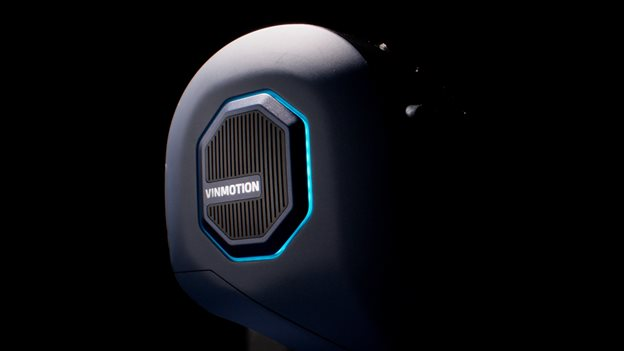
Earlier in December, Dr. Nguyen Trung Quan, VinMotion’s Science Director, revealed notable details about Motion 2 during the “Robotics and Intelligent Automation” seminar (part of VinFuture Science and Technology Week 2025).
According to Dr. Quan, VinMotion’s robots now move more flexibly and faster than they did just three months ago. Notably, the AI has been enhanced with multilingual communication capabilities, particularly in Vietnamese and English.

Regarding Motion 2, Dr. Quan stated that this robot represents a significant leap forward compared to Motion 1, which VinMotion previously showcased to the public.
Specifically, VinMotion is focusing on achieving superior movement capabilities that surpass those of the average human.
“During the design process, I established three critical criteria, which I call the 3S standard, to ensure continuous robot operation. These are: self-standing up (the robot must be able to stand up if it falls); self-battery replacement or charging; and hardware and system stability for uninterrupted operation over many hours,” said Dr. Nguyen Trung Quan.
“In my view, a robot is only truly useful if it can operate continuously 24/7 without direct human intervention. This is a key benchmark we’ve set for this robot,” emphasized VinMotion’s Director.
The launch of Motion 2 at this time indicates that VinMotion is accelerating its humanoid robot commercialization roadmap. With its existing advantages, VinMotion is steadily realizing its goal of bringing Vietnamese robots to the global market, positioning itself as a genuine competitor to tech powerhouses.
Hyra Holdings Startup Backed by Shark Hưng: 14x Surge in Chartered Capital in Just Over a Year

Mr. Hung emphasized that the startup investment activities mentioned on social media are entirely personal in nature and have no legal, financial, or operational connection to Cen Land.
A Dismal Year for AI Stocks: FPT and DGC Giants Miss Out on the Market Rally
Despite their status as industry leaders with promising AI narratives, 2025 is shaping up to be a “year to forget” for shareholders of these stocks.
Global Tech Power and the Sovereign Infrastructure Equation

In the era of accelerated AI, data has transcended its operational role to become a strategic asset. The question is no longer whether to undergo digital transformation, but rather on which infrastructure—robust enough, secure enough, and sustainable enough—to build that transformation.
VNPT Projects 2025 Profits at Nearly $280 Million, Launches New Venture in Booming Sector

As the 2021-2025 period draws to a close, VNPT has not only met but exceeded several key performance indicators. The company achieved a total revenue of nearly 288 trillion VND, with pre-tax profits surpassing 31 trillion VND and contributions to the state budget exceeding 27 trillion VND.
Blockchain Firm Linked to Shark Hưng Announces New Initiative

This company continues to forge strategic partnerships with a diverse array of AI industry leaders.